
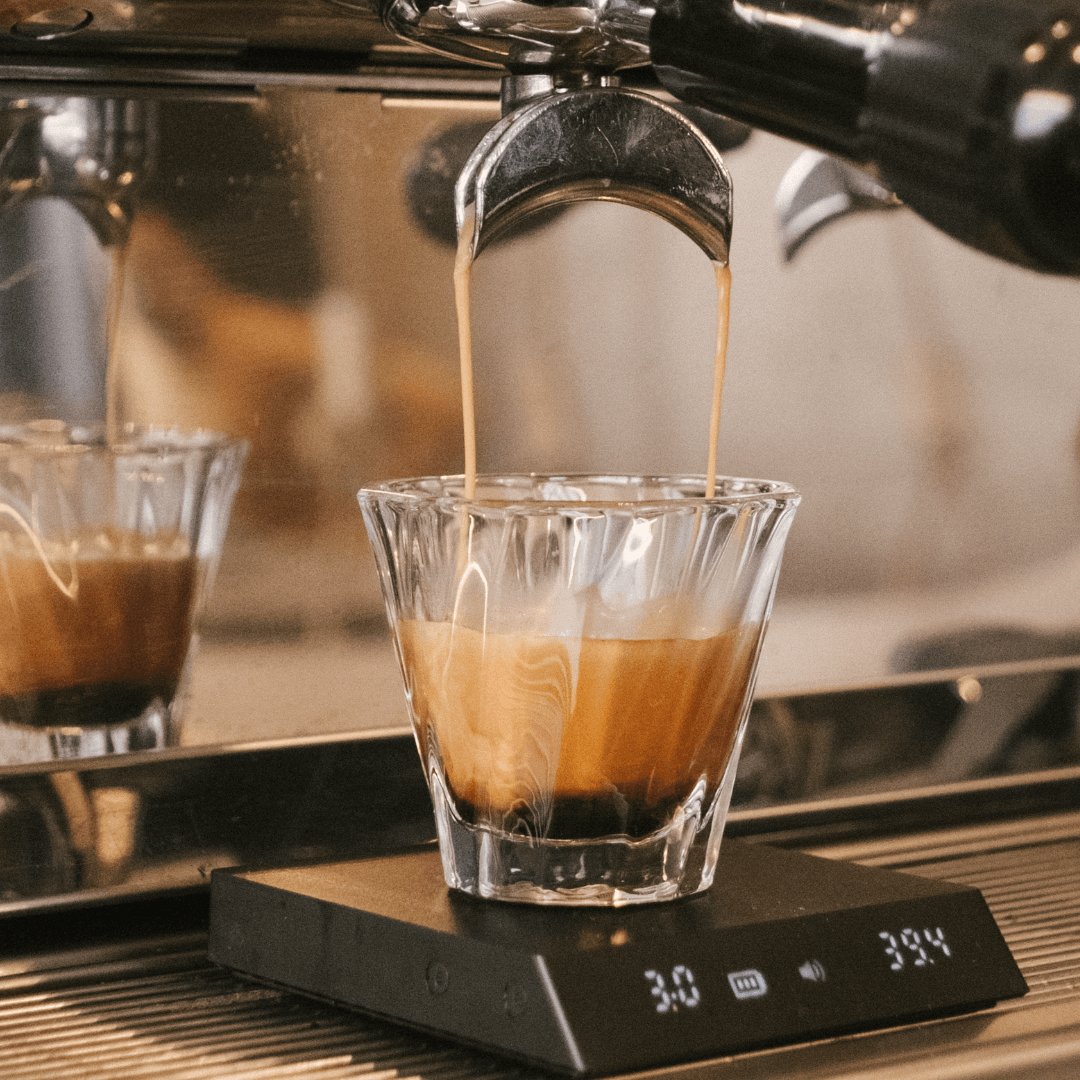
How to choose your coffee maker in 2025 - Manual machine
At the house of At Café Castelo, we receive several questions like this every week:
"Which coffee machine do you recommend?"
Although we don't sell coffee makers – Our specialty is coffee – we understand that choosing the right machine can be a real headache, and consumers want more neutral, expert advice. Since we're often asked about this, we've decided to offer you two separate articles: one on automatic machines, and one, like this one, on manual machines, to help you make an informed choice.
Why choose a manual machine?
Manual espresso machines are popular with coffee lovers who want complete control over their brewing process. Unlike automatic machines, manual machines give you full control of everything from the dosage to the extraction pressure.
And it's not just a matter of purism. There is technical and sensory reasons very strong behind this choice.
1. Total control over the infusion
A manual machine allows you to adjust:
-
The dosage of coffee
-
The compaction
-
Extraction time
-
The water temperature
- Pump pressure
This level of control allows you to adjust every parameter to get the best from your coffee. For beans like those from Café Castelo, which offer complex profiles, it ensures that their full aromatic richness is released.
🧠 As the Italian brand Gaggia summarizes: "Manual machines allow you to experience the traditional rituals of the barista at home."
If you want a manual machine, you should also ask yourself: What is the difference between a pressurized and a non-pressurized manual machine?
Manual machine with pressurized filter holder
This type of machine is designed to facilitate coffee extraction, even if the grind, tamping, or quantity isn't perfectly controlled. This is what you generally find in more affordable, consumer-grade machines. It's an excellent option for beginners or if you're looking for a simple method to make perfect espressos.
How it works:
The filter holder is equipped with a pressure retention mechanism (often a small hole at the bottom) which artificially recreates the resistance necessary for good extraction.
Benefits :
-
Easier to use
-
Less sensitive to grinding or dosage errors
-
Allows you to obtain crema even with pre-ground coffee.
Boundaries :
-
Less control over extraction
-
More standardized result
Manual machine with non-pressurized portafilter (professional)
This type of machine requires greater precision in coffee preparation, but offers a significantly superior result when mastered. This is what you find in semi-professional and professional machines.
How it works:
All the necessary pressure comes from the coffee itself: from the fineness of the grind, the tamping, and the proper filling of the portafilter. The coffee acts as a natural resistance to the water.
Benefits :
-
Better control over taste, balance and texture
-
Extraction more faithful to the grain profile
-
It really allows you to showcase a specialty or freshly roasted coffee.
Boundaries :
-
Requires a good grinder and a little practice
-
Less forgiving of errors (grinding too coarse = under-extraction, too fine = blockage)
2. Quality in the cup: creaminess, complexity, consistency
Manual machines are known for producing:
-
A richer and denser cream
-
An extraction that highlights the subtle notes of coffee
-
A thermal stability More reliable on the higher-end models. Some customers complain that the coffee is never hot enough.
3. An important point: black (strong) coffees and manual machines
Many customers tell us this:
"I bought a manual machine, but I was told I couldn't buy strong coffee anymore!"
Several customers have shared their surprise with us after purchasing a machine, especially when they try to use a strong, black coffee. It's often at this point that they discover a little-known fact: dark coffees aren't always ideal for all automatic machines, but don't worry, that's not all!
The goal of roasting is to create what's called caffeol—the essential oils of coffee. These are what give the cup its rich aroma. The more the roasting process continues, the more these oils are developed. And that's exactly what we're looking for in a full-bodied coffee: a more intense, more enveloping profile. You can't have a strong coffee without a dark roast. And a dark roast means more oils. That's normal, it's intentional, and it's what makes a full-bodied coffee so flavorful. However, At Café Castelo, we focus on balancing the amount of oil and the intensity, so yes, there is some oil present, but it is not an oily coffee that is not compatible with your coffee maker. We have 28 types of coffee, so don't worry, we have excellent customer service that will recommend one according to your coffee maker and tastes.
Oil won't break a coffee machine. It's important to mention this. However, in an automatic machine, these oils can accumulate more quickly in the grinder or brewing unit. This is why many manufacturers recommend using mild to medium-bodied coffees: they naturally contain less oil, and therefore cause less buildup in the internal components.
Whether you prefer strong or smoother coffee, manual extraction is more interesting for bringing out the full range of your coffee's aromatic profile. For a more complete coffee experience, with stronger coffees, More complex machines offer better extraction, so manual machines are often better suited. They require a little more involvement, but offer much more freedom in the choice of beans and in the extraction process.
4.Cost, durability and maintenance
Manual machines generally have:
-
An initial purchase cost lower than high-end automatics
-
A longer lifespan, with fewer electronic components
-
A simple maintenance (descaling, cleaning of the group)
In the long term, they are more economical and sustainable.
5. A more sensory, more satisfying approach
Preparing your coffee manually is also stop, observe, feel.
The gestures, the concentration, the smell of the ground grain… All of this is part of a ritual.
It's not just coffee. It's an experience.
💬 “There’s a unique satisfaction in mastering your espresso from start to finish. You’re not just drinking a coffee. You’re savoring the fruit of your own precision.” – Testimonial from a loyal Castelo customer since 2010
Suggestions for reputable brands (tested by enthusiasts)
Here are some brands of manual machines well-established options, for all budgets:
For beginners or those who want a good, easy-to-use machine:
-
Breville – Excellent option for beginners. Value for money, reliability, simplicity.
-
La Pavoni – Italian icon, retro design, for purists.
-
Seaco – European design, renowned for its thermal consistency.
-
DeLonghi Dedica or La Specialista – Compact, efficient, for heavy-duty home use.
- Gaggia - Good thermal stability, robust construction, offers Italian reliability
Intermediate to advanced
-
Lelit Anna or Lelit Victoria : Italian brand with PID regulator (precise temperature control), powerful steam, beautiful build quality.
-
Bezzera Unica : Semi-professional type construction with E61 group, suitable for those who want precise extraction.
Passionate/Professional at Home
-
Profitec Pro 300 or Pro 500 : High-end materials, double boiler, very high stability.
-
ECM Classika : Retro look, high performance, E61 engine too. A dream machine for the discerning enthusiast.
At Café Castelo, we believe that coffee is a culture, not just a beverage. And if you enjoy exploring, adjusting, and understanding your cup, then a manual machine will be your best ally.
And if you're still hesitating… wait for our next article:
👉 Automatic machines: the best choices for 2025.


Leave a comment
This site is protected by hCaptcha and the hCaptcha Privacy Policy and Terms of Service apply.